

 Current position > News detail
『Refrigerant Flow Meter Installation: Straight Pipe Run Rules and Flow Profile Security』Related information(flow rotameter|digital flow meter|balo meter|hydraulic flow meter|volumetric meter|positive displacement meter|pitot tube flow meter|displacement meter|cfm meter|variable area flow meter|inline flow meter|differential pressure flow meter|calibrated flow meter|velocity meter|paddle wheel flow meter|oval gear flow meter|anemometer hvac|multiphase flow meter|doppler flow meter|thorpe tube flowmeter|heat flow meter)
Refrigerant Flow Meter Installation: Straight Pipe Run Rules and Flow Profile Security
Quick Answer: Refrigerant flow meters need a minimum straight pipe run upstream and downstream to form a stable, swirl-free flow profile. Without enough straight pipe, measurement errors can easily reach 3–5% or more. Coriolis mass meters are far less sensitive to profile distortion, but even they deliver better repeatability with 5D of straight run.
Why Straight Pipe Run Matters for Refrigerant Flow Meters
A flow meter does not measure the whole pipe cross-section at once. It samples velocity at one point or along one path and calculates total flow. This calculation assumes a fully developed flow profile. A fully developed profile means the velocity distribution across the pipe is predictable and stable. In refrigerant lines, elbows, valves, compressors, and tees destroy that profile. They add swirl, asymmetry, and turbulent eddies that take many pipe diameters to settle out.
In practice, we see this problem often on ammonia refrigeration systems in Southeast Asian cold storages and on R507/R404A chiller lines in the Middle East. A flow meter installed 3D after a 90-degree elbow will read 8 to 12 percent high on vapor refrigerant simply because the velocity peak shifts to the outer wall. Liquid refrigerant with a small vapor fraction behaves even worse. The profile distorts non-linearly with mass quality and slip ratio. That is why straight pipe run is a security layer for your measurement, not a soft recommendation.
Upstream and Downstream Straight Pipe Requirements
There is no single rule for every meter type. Each sensing technology tolerates flow disturbance differently. Based on field data from hundreds of installations, we recommend these minimums for refrigerant service:
Vortex flow meters: 15D upstream, 5D downstream. After a compressor discharge or a modulating valve, increase to 25D upstream, or install a flow conditioner at 10D. Silver Instruments SIL-VF vortex meter works well down to 8D upstream in pure gas refrigerant with Reynolds numbers above 20,000.
Thermal mass flow meters: 10D upstream, 3D downstream for gas refrigerant in suction lines or hot gas bypass. If a check valve is nearby, go to 15D upstream. Our SIL-TMF inline model includes a built-in flow straightener for 5D upstream in tight spaces.
Coriolis mass flow meters: Straight pipe run is not mandatory for accuracy. A Coriolis meter like the Silver SIL-CR series will still deliver 0.15% mass flow accuracy with zero straight pipe. But we advise 3D to 5D upstream simply to reduce mechanical pipe stress and vibration, which extends sensor life.
Flow Profile Security and Common Installation Mistakes
Flow profile security means protecting the meter from three types of disturbance: swirl, asymmetry, and pulsation. Swirl comes from two elbows in different planes. A single-plane elbow creates asymmetry, but a second out-of-plane elbow creates a rotating flow that persists up to 50D downstream. In a refrigerant pipe, that swirl shifts the apparent mass balance in a chiller plant so much that plant operators lose confidence in the COP calculation.
A paint manufacturer in Vietnam had a vortex meter on their R410A condenser water loop. The meter was mounted 4D after a reducer and two elbows. Flow error at full load was 6.2% high, confirmed by a clamp-on ultrasonic verification. After moving the meter to a 20D straight section downstream of the pump discharge, the error dropped to 0.8%. This is not a lab story. It was a real service call that cost them one day of production.
Here is the thing. Most engineers skip the flow profile check because it adds time. But with a portable ultrasonic flow meter, you can map the profile at the meter location and find the best clocking position for insertion probes in 30 minutes. We offer a commissioning service across Southeast Asia and the Middle East. Send us your pipe schedule and refrigerant t
Recommended Flow Meter Types for Refrigerant Lines
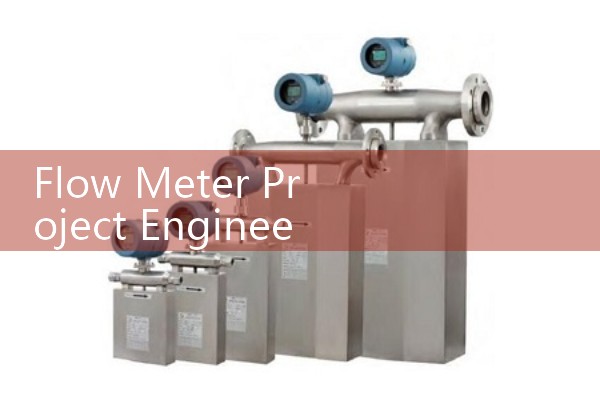
For liquid refrigerant without vapor breakout, we often supply oval gear meters (SIL-OG series) for low-viscosity applications like HFC metering with turndown up to 100:1. For direct mass flow and density output of two-phase resistant performance, the Coriolis SIL-CR with -40 to 200 °C rating fits R744 and R717 systems well. On gas refrigerant, thermal mass flow meters SIL-TMF with 4-20 mA HART outputs and ATEX Zone 1 certification are popular in GCC countries for oil and gas refrigeration packages.
You can also use a vortex meter on superheated gas refrigerant if you are on a budget. Choose the version with integrated temperature and pressure compensation (SIL-VF DP) and select a wafer body between DN15 and DN200. The cost is roughly half of a Coriolis meter for a comparable pipe size. Just remember to respect the straight pipe rules.
Commissioning Check: Verify the Flow Profile in the Field
A simple way to verify profile security after installation is comparing the meter output with a external clamp-on ultrasonic flow meter at a straight pipe section further upstream or downstream. If the deviation exceeds 2% at a stable load, the meter location likely suffers from profile distortion. In that case, you can add a pipe bundle flow straightener 5D before the meter or relocate the meter.
Because refrigerant density changes drastically with temperature and phase, we always recommend you log temperature and pressure at the meter inlet for the first week. That data helps us diagnose if the error is flow profile related or a phase change issue. If you need a startup checklist for your refrigerant flow meter, contact our engineers at [email protected] or call +86-135-1213-1526. We respond within 24 hours for customer sites in Australia, UAE, and Thailand.
FAQ
What is the minimum straight pipe run for a vortex flow meter on a refrigerant line?
Use 15D upstream and 5D downstream as a baseline. If the upstream pipes include an axial compressor or reciprocating compressor without a discharge pulsation damper, extend to 25D upstream. For cramped machine rooms, a flow straightener can reduce that to 10D upstream plus the straightener length.
Can I install a flow meter directly after a compressor discharge?
Not directly. Compressor discharge lines have intense pulsation, temperature spikes, and oil mist that degrade measurement. Provide at least 20D of straight pipe and install a pulsation dampener upstream. Better yet, move the meter to the liquid line after the condenser where flow is steadier.
How does two-phase flow affect straight pipe requirements?
Two-phase refrigerant flows are stratified, slug, or annular, which makes any velocity-based meter unreliable regardless of straight pipe length. The flow profile assumption breaks entirely. In these cases, only a Coriolis meter measuring mass flow and density directly can provide meaningful data. Even then, ensure the meter is mounted vertically with upward flow to keep the tubes full.
What if I do not have enough straight pipe run?
You have three choices: accept a higher measurement uncertainty and correct the output with a calibration factor derived from a clamp-on ultrasonic reference, install a pipe bundle flow straightener, or switch to a Coriolis meter that is profile immune. Our team can help you decide which path fits your refrigerant application best. Reach us on WhatsApp at 86-135-12131526.
Does a Coriolis flow meter need straight pipe run?
No straight pipe run is required for flow accuracy. A Coriolis meter directly measures mass flow by detecting tube twist, independent of velocity profile. However, to avoid pipe strain and vibration-induced drift, we suggest 3D to 5D straight pipe before and after the meter. This is especially important on small-bore tubes like DN10 to DN25 used in supermarket refrigeration packs.