

 Current position > Product detail
『Do I Need a Flow Meter for My Pool: Verifying Filtration System Turnover Rates』Related information(flow rotameter|digital flow meter|balo meter|hydraulic flow meter|volumetric meter|positive displacement meter|pitot tube flow meter|displacement meter|cfm meter|variable area flow meter|inline flow meter|differential pressure flow meter|calibrated flow meter|velocity meter|paddle wheel flow meter|oval gear flow meter|anemometer hvac|multiphase flow meter|doppler flow meter|thorpe tube flowmeter|heat flow meter)
Do You Need a Flow Meter for Your Pool? Verifying Filtration System Turnover Rates
Quick Answer: Yes, if you operate a commercial pool, public pool, spa, water park, or resort pool. A flow meter verifies the real filtration flow rate and confirms the turnover time required by local health codes. For a small residential pool, a flow meter is usually optional unless you need proof of filter performance or you run automated dosing.
Most pool health rules express turnover in hours. Turnover is the time needed to move the full pool volume through the filtration system once. Example: a 100 m3 pool with a measured flow of 25 m3/h has a 4 hour turnover. If you do not measure flow, you are guessing. Pumps wear, filters clog, valves leak, and actual flow drifts lower over time.
Why Turnover Rate Matters in Pools
Commercial swimming pools in Southeast Asia and the Middle East often must meet strict local health rules. A typical main pool needs a turnover of 4 to 6 hours. A children pool or wading pool may require 1 to 2 hours. A spa or hot tub often requires 30 minutes or less. These values change by country. A pool operator in Vietnam told us last year that his inspector asked for written turnover records, not just pump nameplate data. That is why flow measurement becomes a compliance tool.
Filtration removes particles, bacteria, and oils. If actual flow is 30 percent below design, the turnover time increases. The water stays dirty longer. Chemical dosing also becomes less predictable. A flow meter gives you a real number in m3/h or L/min.
Common Signs You Need a Pool Flow Meter
You manage a commercial pool, water park, hotel pool, resort pool, or public aquatics center.
Your local code requires turnover verification or daily log sheets.
You suspect that the pump is oversized or undersized.
You need to schedule filter backwash based on pressure and flow, not just runtime.
You want to detect filter media channeling, clogged strainers, or closed valves.
In practice, many engineers skip flow meters on small residential pools. That is fine for a backyard pool with low risk. But if you operate 10 to 20 pools across hotel properties, a clamp-on ultrasonic flow meter can be moved from site to site. It saves money and gives you a field verification tool.
Which Flow Meter Works for Pool Filtration
Pool water is conductive. An electromagnetic flow meter is a strong choice for inline installation on PVC or stainless steel pipe. Select a meter with a liner that tolerates chlorine or salt chlorinator water. EPDM or PTFE liners are common. Electrodes should be 316L, Hastelloy, or titanium for salt pools. Pipe size often ranges from DN25 to DN150 for pool filtration lines. Turndown is usually enough to cover backwash flow and normal filtration flow.
Ultrasonic clamp-on flow meters are easier to retrofit. They strap onto the outside of the pipe without cutting. This works for scheduled verification, service teams, and temporary audits. Accuracy is lower than an electromagnetic meter but good enough for turnover checks in many cases. For permanent billing or chemical dosing control, an inline electromagnetic flow meter is better.
Silver Automation Instruments supplies electromagnetic flow meters and ultrasonic flow meters for pool, water park, and water treatment applications. We work with contractors in Australia, the Philippines, Saudi Arabia, Mexico, and Thailand. A common request is a DN80 electromagnetic flow meter with 4-20 mA HART output, a local display, and an IP67 housing. Some customers add RS485 Modbus for building management systems.
How to Calculate Turnover Rate
The formula is simple. Divide pool volume by actual flow rate.
Turnover hours = pool volume in m3 divided by flow rate in m3/h.
Example: a 60 m3 lap pool with a measured flow of 15 m3/h has a 4 hour turnover. If the flow meter shows 11 m3/h, the turnover is 5.45 hours. That may fail a 4 hour code.
Always measure flow with the system running at normal filtration speed. Do not measure during backwash. Record pressure, flow, pump speed, and valve positions. Repeat the check weekly or monthly. This builds a log that inspectors accept.
Here is the thing. Pump curves tell you design flow. They do not tell you actual flow after installation. Pipe length, elbows, filter loading, and valve settings change the system curve. A flow meter closes that gap.
Installation Points for Pool 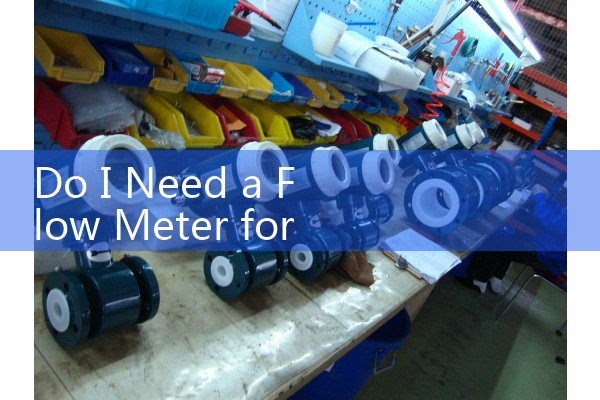
Install an electromagnetic flow meter on a straight pipe run. Follow the recommendation from the meter supplier, usually 10 diameters upstream and 5 diameters downstream. Avoid air pockets. Pool pumps can pull in air from skimmer boxes or loose fittings. Air bubbles cause reading spikes and unstable output. Mount the meter in a flooded pipe section that always stays full.
For chlorine or salt water, verify the liner and electrode material. A customer in Malaysia replaced a cheap meter after 8 months because the electrodes corroded. Ask for titanium electrodes if your pool uses a salt chlorinator.
For clamp-on ultrasonic meters, clean the pipe surface. Remove paint and rust. Use coupling gel. Do not clamp over a weld seam. Pipe outside diameter must match the meter input data. Incorrect pipe wall thickness causes error.
When a Pressure Gauge Is Not Enough
A pressure gauge shows filter differential pressure. It does not show flow rate. A clean filter at high flow can show the same pressure as a dirty filter at low flow. Filter media condition, pump wear, and valve position all affect flow independently. Flow meters combined with pressure gauges give a better picture. One customer in the Philippines found a partially closed suction valve only after a clamp-on flow meter showed 40 percent flow loss. Pressure alone looked acceptable.
Field Results from Pool Projects
In 2023 a resort group in Thailand ordered four DN100 electromagnetic flow meters for pool pump rooms. They installed the meters on the main filtration return lines. The site engineer used the readings to adjust variable speed pumps. Energy cost dropped because the pumps no longer ran faster than needed. Turnover stayed within code at 4.2 hours instead of the previous 5.1 hours.
A service company in Australia uses a portable clamp-on ultrasonic flow meter for monthly pool audits. They check actual flow, record turnover, and identify filters that need backwashing. Because the filter itself adds resistance, the real flow rate is always lower than the pump curve suggests. The meter gives them a repeatable measurement instead of a visual guess.
Recommended Parameters for Pool Flow Meters
Pipe size: DN25 to DN150 typical, some main lines up to DN200
Flow range: 1 to 200 m3/h depending on pipe size
Liner: PTFE or EPDM for chlorinated water, PTFE preferred for salt or high chlorine
Electrodes: 316L standard, titanium for salt pools
Output: 4-20 mA HART, pulse, or RS485 Modbus
Protection: IP67 or IP68 for outdoor pits
Power: 24 VDC or 220 VAC
Process connection: wafer or flange, DIN or ANSI
Send us your pool volume in m3, pipe size in DN, flow range in m3/h, and chlorine concentration. We will recommend a Silver Instruments electromagnetic flow meter or ultrasonic flow meter with a clear quote.
FAQ
1. Do I need a flow meter for a residential pool?
Usually no. A residential pool is low risk and visual water quality checks are often enough. If you have a large residential pool with automated chemical dosing or a heat pump, a small flow meter helps with control.
2. Can a flow meter prove filtration turnover for a health inspection?
Yes. A flow meter with a local display or a logged output gives a direct measurement. Record pool volume, measured flow rate, and the calculated turnover time. Inspectors accept logged data from a calibrated meter more readily than pump nameplate data.
3. Which is better for a pool, an electromagnetic flow meter or a clamp-on ultrasonic meter?
For permanent installation and higher accuracy, choose an electromagnetic flow meter. For a portable audit tool or a retrofit without cutting pipe, choose a clamp-on ultrasonic flow meter. Both are suitable for pool water.
4. What flow range should I select?
Match the meter to the pipe size and expected flow. For a DN80 pool line, a typical range is 5 to 80 m3/h. For a DN50 line, 2 to 40 m3/h works. Always include backwash flow if the meter stays in line during backwash.
5. How do I order a pool flow meter from Silver Automation Instruments?
Send us an email or WhatsApp message with your pipe size, pool volume, normal flow rate, backwash flow rate, chlorine level, and output signal. Our contact details are below.
Contact Silver Automation Instruments. Tel: +86-135-1213-1526. Whatsapp: 86-135-12131526. WeChat: +86 13512131526.