

 Current position > News detail
『Dairy Flow Meter: Sanitary 3A Certified Milk Processing Sensors』Related information(flow rotameter|digital flow meter|balo meter|hydraulic flow meter|volumetric meter|positive displacement meter|pitot tube flow meter|displacement meter|cfm meter|variable area flow meter|inline flow meter|differential pressure flow meter|calibrated flow meter|velocity meter|paddle wheel flow meter|oval gear flow meter|anemometer hvac|multiphase flow meter|doppler flow meter|thorpe tube flowmeter|heat flow meter)

Dairy Flow Meter: Sanitary 3A Certified Milk Processing Sensors
Quick Answer
Silver Instruments supplies sanitary flow meters that carry full 3A certification for milk reception, pasteurization, and CIP return lines in dairy plants. These meters eliminate dead zones and use Ra ≤ 0.8 µm polished 316L wetted parts to prevent bacteria build-up. You get a repeatable 4-20 mA HART or Modbus signal ready for your PLC, with zero moving parts to wear out.
Why a 3A certified flow meter matters in a dairy
Dairy fluids spoil fast. A non-sanitary meter with crevices, elastomer gaps, or rough internal surfaces becomes a contamination risk in hours. 3A standards enforce material traceability, surface finish, and cleanability. Our sanitary electromagnetic and Coriolis meters are built to 3A 28-03 and EHEDG guidelines, so they survive aggressive CIP cycles at 130 °C and 2 % NaOH without degrading liner or electrodes. Because the sensor is full-bore with no constrictions, yogurt, cream, and high-fat milk pass through without shearing or product buildup.
Which flow technologies work best in milk processing
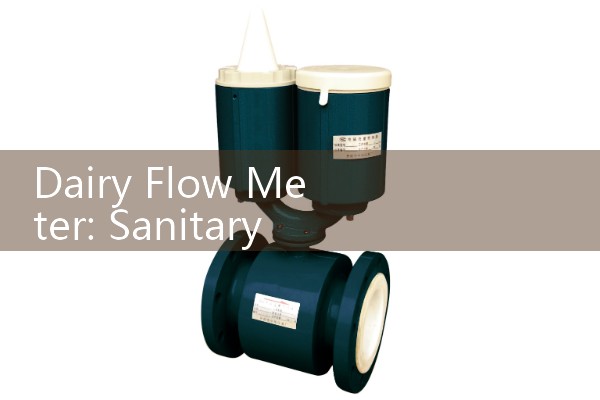
Most dairy sites pick between sanitary electromagnetic flow meters and sanitary Coriolis mass flow meters. Electromagnetic meters need a minimum conductivity of about 5 µS/cm. Raw milk and whey easily exceed that, so a magmeter works reliably. Our SIL-EMAG-S sanitary magmeter handles DN10 to DN100, offers 316L electrodes, PTFE or PFA liner, and Tri-Clamp connections per DIN 32676. Accuracy is ±0.5 % of reading over a flow velocity range of 0.3 to 10 m/s.
For high-viscosity products like cream, condensed milk, or cheese curd slurry, a Coriolis meter gives direct mass flow and density, no conductivity needed. Our SIL-CORIO-S series comes with a 3A approved single straight tube, full-bore design, good for viscosities up to 50 000 cP. Outputs include 4-20 mA HART, pulse, and RS485 Modbus RTU. Accuracy hits ±0.15 % for mass flow, and you also get temperature and density readings in one device.
Real site detail a paint manufacturer does not see
Here is the thing: dairy engineers do not just care about accuracy. They care about how fast a meter drains after CIP and whether the liner swells after 200 heat cycles. We have seen this on customer sites many times. A milk powder plant in Thailand replaced three oval gear meters on their evaporator feed with DN40 sanitary electromagnetic meters last year. The old meters leaked chocolate-colored residue at the mechanical seal after every third CIP. The new magmeters had a polished PFA liner and no moving parts. Six months later, bacterial swab tests came back clean on every shift.
Installation details engineers ask about
Pipe size typically ranges from DN15
Signal and integration
Most dairies use 4-20 mA HART to the site PLC or a flow computer. We also supply integral mount transmitters with a backlit LCD showing flow rate in L/min or kg/h, totalizer, and diagnostic symbols. The transmitter housing is IP67 washdown-rated. For sites migrating to digital fieldbus, you can spec Modbus RTU or Profibus DP. Because a dairy has wet floors and foam, we use stainless steel cable glands and advise routing the signal cable in a drip loop away from the sensor neck.
FAQ on sanitary dairy flow meters
Does the 3A certification apply to the whole meter or just the wetted parts?
3A covers the complete sensor including the housing seal design. Our meters hold a 3A Certificate valid for the entire flow tube and process connection up to the transmitter neck.
Can the electromagnetic meter handle raw milk at 4 °C straight from the tanker?
Yes. Raw milk conductivity is about 4 to 6 mS/cm at 4 °C, well above the 5 µS/cm threshold. The meter starts measuring within 2 seconds of wetting the electrodes.
Will the Coriolis meter block during viscous yogurt transfer?
No. The SIL-CORIO-S uses a straight single tube with absolutely no flow splitter. Yogurt with 2000 cP passes without plugging and without pressure drop spikes.
What maintenance does a sanitary magmeter need after two years?
Very little. Check the electrode coating every 12 months during a scheduled CIP inspection. If high-fat product builds a film, a hot 2 % caustic CIP cycle cleans it away without disassembling the pipe.
Do you ship with a calibration certificate for milk applications?
Every meter leaves our factory with a wet calibration certificate traceable to ISO 17025. We calibrate with water at three flow points. For Coriolis meters we can provide a viscosity-matched calibration if you send the product data.
Tell us your fluid (milk, whey, cream, yogurt), pipe size (DN), temperature range, and operating pressure in bar. Email [email protected] or call +86-135-1213-1526. For quick messaging, WhatsApp 86-135-12131526 or WeChat +86 13512131526. We will propose the right 3A certified meter with a formal quotation within one working day.