

 Current position >About Us
Argon Flow Meters and Flowmeter Argon Layouts: Shielding Gas Control for TIG Welding Systems
Argon Flow Meter Selection for TIG Welding Cells
Quick Answer: Argon flow meters give TIG welding operators a direct reading of shielding gas flow. The correct flowmeter argon layout keeps gas coverage stable, prevents weld oxidation and reduces argon waste. Silver Instruments supplies inline thermal mass flow meters for argon with DN15 and DN25 connections, 4 to 20 mA HART output and flow ranges from 0.5 to 50 L/min.
Most weld defects in TIG work start with small changes in argon flow. Operators set the flowmeter once and assume the gas stays constant. In practice, line pressure changes, regulator temperature shifts and torch valves wear. The result is a drop from 14 L/min to 10 L/min without a clear alarm. That small drift can ruin a stainless steel weld in seconds.
Last year a pressure vessel shop in Malaysia asked us to check repeatability on their existing argon rotameters. The float tubes had cracked because of mechanical shock. The readings drifted by plus or minus 15 percent. We replaced them with Silver Instruments thermal mass flow meters on the main argon header and on two weld cells. The shop now records argon usage per job and catches gas leaks early.
Common argon flow meters include glass tube rotameters, metal tube rotameters and thermal mass flow meters. Rotameters are simple but they need clean gas and regular calibration. Thermal mass flow meters suit argon because they measure actual gas mass flow, not volume at changing pressure. They also provide 4 to 20 mA HART signals for a PLC or data logger. No need to rely on an operator reading a float.
Flowmeter argon layout matters more than the meter brand. Install the flowmeter downstream of the pressure regulator but upstream of the torch solenoid. Keep a straight inlet run of at least 10 pipe diameters before the meter. Use a needle valve downstream of the flowmeter for fine adjustment. Do not mount the flowmeter directly on a vibrating torch cart. Vibration shifts the reading on many thermal dispersion sensors. We have seen this on customer sites in the Middle East where high ambient heat also affected electronics.
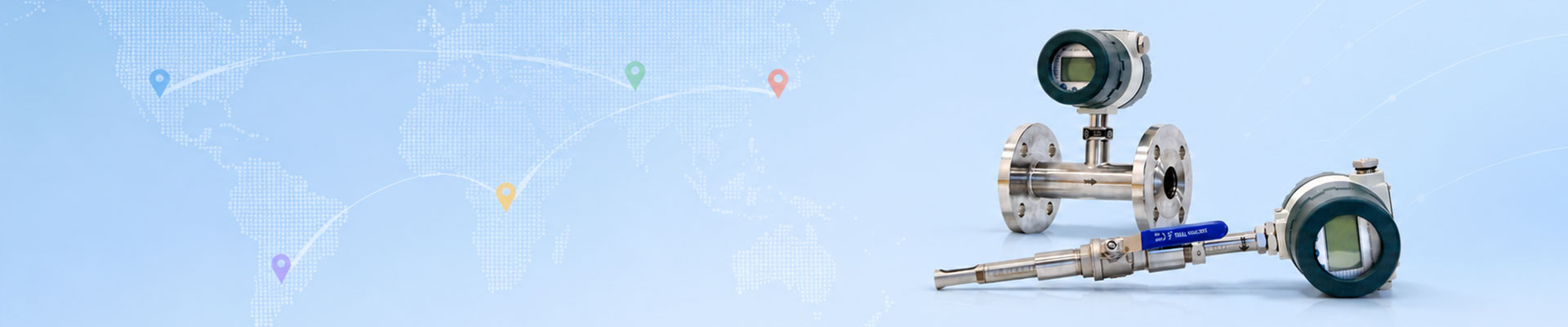
For TIG welding cells, we recommend a DN15 inline thermal mass flow meter with stainless steel wetted parts. The display shows L/min in real time. The 4 to 20 mA HART output connects to a simple loop monitor or plant SCADA. If you need to track total argon consumption, select a version with pulse output or Modbus RTU. For main gas distribution lines from a cylinder manifold or microbulk tank, a DN25 flowmeter with a flow range of 1 to 200 L/min works well.
Calibration matters. Specify argon as the calibration gas. Do not accept an air calibration correction factor for critical welding. A flowmeter calibrated on air can read incorrectly on argon by up to 6 percent depending on the sensor type. Silver Instruments calibrates argon flow meters on a gas flow bench before shipment. We also provide a test certificate with each unit.
Pressure and temperature input help if your argon pressure changes by more than 2 bar during a shift. Some thermal mass flow meters have built in pressure compensation. For most TIG jobs, pressure is stable enough after the regulator. But gas manifold systems with multiple welders may need pressure transmitters at each drop. That data helps you see when one cell is starving the others.
FAQ: Argon Flow Meters and TIG Welding Gas Control
What argon flow rate should I set for TIG welding?
Typical argon flow for TIG welding is 8 to 15 L/min depending on cup size, tungsten stickout and draft conditions. Stainless steel pipe welding often uses 10 to 15 L/min. Aluminum may need 15 to 20 L/min with a larger cup.
Can I use an air rotameter for argon?
You can use a clean air rotameter for rough se