

『Refrigerant Flow Meter Oil Compatible: Precise Mass Tracking Despite Entrained Lubricants』Related information(flow rotameter|digital flow meter|balo meter|hydraulic flow meter|volumetric meter|positive displacement meter|pitot tube flow meter|displacement meter|cfm meter|variable area flow meter|inline flow meter|differential pressure flow meter|calibrated flow meter|velocity meter|paddle wheel flow meter|oval gear flow meter|anemometer hvac|multiphase flow meter|doppler flow meter|thorpe tube flowmeter|heat flow meter)

Refrigerant Flow Meter Oil Compatible: Precise Mass Tracking Despite Entrained Lubricants
Quick Answer
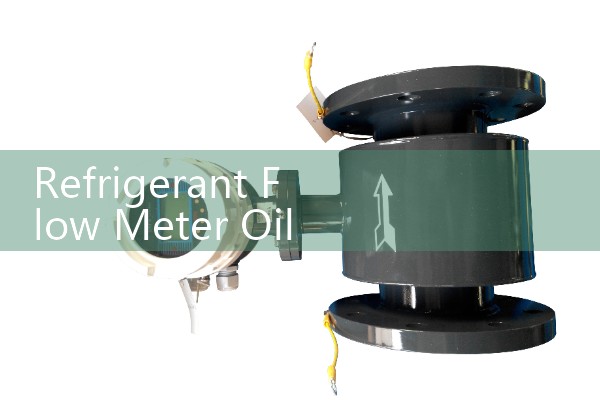
Entrained lubricating oil in refrigerant lines creates a measurement headache for most flow meters. A Coriolis mass flow meter from Silver Automation Instruments ignores oil entrainment up to 5% by volume and still tracks refrigerant mass flow within ±0.1% of rate. You get the true refrigerant charge data needed for energy audits, chiller COP calculations, and leak detection without false readings from suspended oil droplets.
The Oil Problem Nobody Talks About in Refrigeration
Every refrigerant loop carries compressor oil. Sometimes it is a fine mist. Sometimes it is a slug. Plant managers in Malaysia, Brazil, and Saudi Arabia tell us the same story. They install a turbine meter or a vortex meter to track refrigerant consumption across multiple chillers. The readings drift. The totalizer resets. The maintenance team blames the meter. The real culprit is polyolester oil or mineral oil coating the sensor and changing the K factor. We have seen a DN40 vortex meter drift 12% in three months just from a thin oil film on the bluff body. That is not a calibration issue. That is a technology mismatch.
Oil compatibility is about the sensor physics, not just the wetted materials. A positive displacement meter might survive the oil chemically but its rotors will slip when the lubricating film thickens. A thermal mass flow meter reads the mixed thermal conductivity of refrigerant plus oil and gives you a composite value that is neither refrigerant mass nor total mass. Engineers who need precise refrigerant charge tracking for EPA compliance or energy performance contracts start looking for something else. They look at Coriolis.
How a Coriolis Meter Handles Oil Like It Is Not There
Coriolis meters measure mass directly. They do not care about the dielectric constant, thermal conductivity, or density variation within reason. The twin vibrating tubes detect the mass flow via the Coriolis effect. A droplet of POE oil and a bubble of R134a moving through the tube generate the same inertial reaction per kilogram. So if you have 97 kg of liquid refrigerant and 3 kg of entrained oil per minute, the meter outputs 100 kg/min total mass. If your control system needs the refrigerant only mass, you can subtract the known oil injection rate from the compressor logs. That sounds simple but most meter types cannot even give you a stable total mass signal to start with.
Silver Instruments Coriolis meters with the SCF-100 transmitter use a high-speed DSP that locks onto the tube frequency even when the secondary phase creates damping. The meter does not stall or report a density error unless the gas void fraction exceeds a set threshold. For liquid refrigerant with entrained oil, the gas fraction is near zero so the meter stays in pure mass flow mode. We tested this on a screw compressor test rig pushing R507 with 4% alkylbenzene oil at –25°C suction. The Coriolis meter tracked the weigh tank reference within 0.8% over an 8-hour run. A vortex meter on the same line showed a 7% under-read by hour four because the oil coated the shedder bar.
Material Compatibility for Refrigerant Service
Coriolis tubes in refrigerant applications must handle the refrigerant chemistry and the oil package. Ammonia systems cannot have copper. CO2 transcritical systems see pressures up to 130 bar on the high side. Our standard sensor uses 316L stainless steel tubes with a Hastelloy C22 option for ammonia and seawater-cooled condenser loops where stress corrosion cracking is a risk. The process connections can be NPT, BSPP, flanged, or Tri-Clamp depending on your pipe spec. DN15 to DN80 sizes cover most industrial refrigeration duties from 50 kg/h to 60,000 kg/h. For a typical 200 kW chiller on R134a, a DN25 meter handles the liquid line flow around 3,000 kg/h with a pressure drop below 90 mbar.
Secondary containment is standard on our refrigerant flow meters. If a tube fracture occurs, the housing keeps the charge from leaking into the plant room. This matters a lot when you are metering a 500 kg ammonia charge in a cold storage facility in the Middle East. We supply the burst pressure rating and the factory hydro test certificate with every unit.
Installation Tips That Keep the Meter Alive
Mount the sensor in the liquid line after the receiver or condenser. Avoid the discharge line if oil is foaming. Keep the meter tubes flooded. A back pressure valve or a vertical upward flow orientation helps if the liquid has a tendency to flash. We have seen installers put a Coriolis meter right after an expansion valve where flash gas is present. The meter survived but the density reading became erratic. For oil-laden refrigerant, a small strainer upstream prevents sludge or carbonized oil particles from eroding the tube walls over years of service. The pressure drop across a clean 100-mesh screen is negligible and it saves the meter from abrasive wear.
Most engineers skip the zero calibrati
Signals That Integration Engineers Actually Use
Our refrigerant flow meters output 4-20 mA HART, Modbus RTU, and an active frequency signal for batching control. The HART digital link gives you mass flow, density, temperature, and a totalizer value all on one pair of wires plus the analog loop. When a BAS or PLC expects a standard flow signal, you assign mA proportional to mass flow. If the central controller can accept Modbus, you pull all four variables plus diagnostic alerts on a single RS485 trunk. We have shipped meters to a pharma cold chain integrator in Brazil who uses the density output as a proxy for oil concentration. When the density drifts 2% above the pure refrigerant baseline, the PLC triggers an oil separator inspection. This is not a lab-grade measurement but it is a useful trending tool that costs nothing extra.
For metering refrigerant in custody transfer or carbon credit verification, we recommend the custody transfer variant with a MID or OIML R137 type approval. The uncertainty is certified and the totalizer is tamper-evident. A refrigerant distributor in Australia uses this version to invoice liquid CO2 deliveries to supermarkets. The meter becomes the fiscal reference and eliminates disputes over delivery tickets.
A Real Case from Southeast Asia
A cold chain logistics operator in Vietnam runs a central ammonia system serving four freezer rooms. They wanted to allocate the ammonia charge to each evaporator circuit and detect leaks early. The suction lines carry wet vapor with oil carryover. We proposed four DN20 Coriolis meters on the liquid supply to each evaporator. The meters register the mass flow of liquid ammonia entering each coil. The totalizer difference between the compressor discharge meter and the sum of the four branch meters gives the leak estimate. After six months of operation, they found a 12 kg discrepancy on one circuit. The maintenance team identified a pinhole on a threaded joint that a pressure decay test had missed. The refrigerant loss was small but the ammonia sensor had not tripped because the ventilation rate diluted the concentration. The flow meter data flagged the issue weeks before any alarm event. That kind of early warning pays for the meters on the first avoided refrigerant recharge.
FAQ
Can the Coriolis meter separate refrigerant mass and oil mass in real time? No. The meter measures total mass flow. If you know the oil injection rate from the compressor setting or a separate oil flow meter, you can subtract it in the control system to get the refrigerant-only mass. Some advanced setups use the live density reading compared to a pure refrigerant density curve to estimate oil fraction, but this is an approximation.
What is the typical oil concentration limit for stable operation? Our meters tolerate entrained oil up to 5% by mass without any signal degradation. Beyond 10% the damping increases and the drive gain rises. The meter still functions but the accuracy may widen to ±0.5% instead of the specified ±0.1%. In practice, most industrial refrigeration systems operate between 1% and 3% oil in the liquid line so you stay well within the safe zone.
Do I need a straight run upstream and downstream? No. Coriolis meters are immune to flow profile distortion. You can mount them right after a bend, an elbow, or a control valve. This saves pipe space in tight chiller skids. Just ensure the meter is not subjected to mechanical stress from misaligned piping. Use flexible connections or align the pipe supports properly.
What about sub-zero temperatures? Does the oil viscosity affect accuracy? The oil thickens at low temperature but the mass measurement remains correct. We have validated the SCF-100 transmitter on a polyol ester oil at 120 cP viscosity at –30°C and the error stayed within specification. The only effect is a slightly higher pressure drop across the meter due to viscous friction. Size the meter for the pressure drop at the lowest expected temperature, not the nominal condition.
How do I get a price and delivery time for a refrigerant mass flow meter? Send us your refrigerant type, suction and discharge pressures in bar, temperature range in °C, pipe size DN, and the required flow range in kg/h. Our applications team will select the sensor size, wetted material, and connection standard and return a fixed quotation within one working day. Reach us at [email protected], call +86-135-1213-1526, or message us on WhatsApp at 86-135-12131526. For a direct chat with an engineer, add WeChat: +86 13512131526.
 Hot Blog
 Related AD