

『Turbine Flow Meter Working Principle: Hydrodynamic Rotor Frequency Calculations』Related information(flow rotameter|digital flow meter|balo meter|hydraulic flow meter|volumetric meter|positive displacement meter|pitot tube flow meter|displacement meter|cfm meter|variable area flow meter|inline flow meter|differential pressure flow meter|calibrated flow meter|velocity meter|paddle wheel flow meter|oval gear flow meter|anemometer hvac|multiphase flow meter|doppler flow meter|thorpe tube flowmeter|heat flow meter)

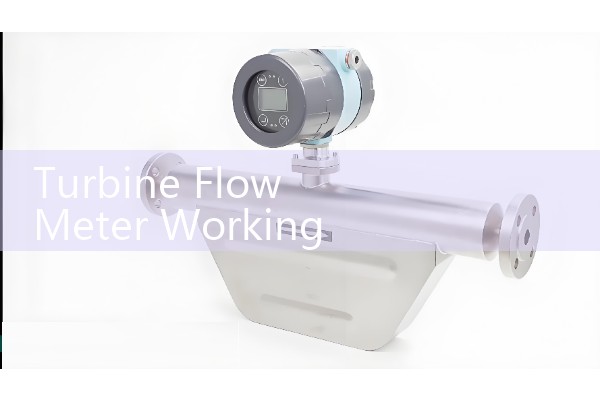
Turbine Flow Meter Working Principle: Hydrodynamic Rotor Frequency Calculations
Quick Answer: A turbine flow meter converts fluid velocity into rotor rotation. A magnetic pickup detects each blade pass and outputs a frequency signal proportional to volumetric flow. The core formula is frequency in Hz equals K factor in pulses per liter multiplied by flow rate in liters per second.
How the Turbine Rotor Generates a Frequency Signal
Flow enters the meter body and passes through a flow straightener. The fluid hits the rotor blades at an angle. The rotor spins on a bearing assembly. A magnetic pickup sits above or beside the rotor. Each blade passing the pickup changes the magnetic field. The pickup sends out a small sine wave or square wave pulse. In practice, the raw signal from a pickup coil is only a few millivolts. A preamplifier boosts this signal before the transmitter counts the pulses.
Most engineers skip this part. The important point is the rotor frequency is not random noise. It has a direct link to fluid velocity. For a rotor with 8 blades spinning at 750 rpm, the blade passing frequency is (8 x 750) / 60 = 100 Hz. That raw signal becomes the input for the K factor calculation.
Hydrodynamic Rotor Frequency Formula
The standard pulse frequency calculation is:
f = K x Q
Where f is output frequency in Hz. K is the calibration constant in pulses per liter or pulses per cubic meter. Q is actual volumetric flow rate in liters per second or cubic meters per hour.
Example: A DN40 turbine meter has a K factor of 265 pulses per liter. Flow rate is 0.8 L/s. Output frequency is 265 x 0.8 = 212 Hz. A DN100 meter with a K factor of 15.7 pulses per liter at 40 m3/h gives 40 m3/h divided by 3.6 equals 11.11 L/s. Frequency is 15.7 x 11.11 = 174.4 Hz.
In the field, you will rarely see frequencies above 3000 Hz on small line sizes. Very high frequencies can be clipped by old counters or PLC input cards. If you use a PLC, check the maximum input frequency before specifying a small DN15 meter. A DN15 meter with a K factor of 900 pulses per liter at 0.5 L/s gives 450 Hz, which is safe for most standard PLC inputs.
K Factor Calibration and Viscosity Effects
K factor is not a fixed universal number for every fluid. It comes from wet calibration against a master meter. Water calibration is common. For fuels with viscosity from 1 to 5 cP, the shift in K factor is usually under 0.5 percent. For fluids above 20 cP, the rotor drag changes. Frequency output drops at low flow. Accuracy becomes nonlinear. In that case a positive displacement meter or oval gear meter works better.
Temperature also matters. A PT100 sensor can be installed inside the meter body for density or viscosity correction in the transmitter. For batch dosing of hot solvents at 90 deg C, the rotor body expands slightly. The K factor can shift by 0.2 to 0.4 percent. We have seen this on customer sites in Southeast Asia. The fix is a correction curve in the flow computer or a factory calibration at the actual service temperature.
Signal Conversion to 4-20 mA HART
The raw frequency signal is useful for batching systems. Most control systems prefer an analog signal. A turbine flow meter transmitter converts frequency into 4-20 mA HART. For example, 0 Hz equals 4 mA. The maximum configured frequency equals 20 mA. If the maximum frequency is 1500 Hz, then 750 Hz equals 12 mA. The HART signal also gives totalized flow, frequency, and diagnostic information over two wires.
Some Silver Instruments turbine flow meters have an optional local display. The display can show flow rate in L/s, m3/h, or US gallons per minute. Export customers in Latin America often ask for gallons per minute. In that case the K factor is entered as pulses per US gallon. The conversion is 1 liter equals 0.264172 US gallons. Skipping this conversion is a common source of totalizer error.
Installation Factors That Affect Rotor Frequency
 >Straight pipe lengths are required for a stable frequency signal. A typical rule is 10D upstream and 5D downstream. D means nominal pipe diameter. A DN80 meter needs 800 mm of straight pipe before the meter. A flow conditioner can reduce upstream straight run to 5D in tight skids. Avoid partially open valves close to the meter inlet. Swirl distorts the rotor speed and creates frequency jitter.
Gas bubbles cause the rotor to overspeed. The pickup then outputs a frequency that is higher than the actual liquid flow. Install the meter in a flooded line. Keep enough back pressure to prevent cavitation. For hot water at 110 deg C, maintain at least 1.5 bar back pressure on the meter outlet. A customer in the Philippines had unstable readings on a DN65 turbine meter because the meter was installed at the top of a horizontal pipe with trapped air. Moving the meter to a lower horizontal run fixed the issue.
Typical Applications for Turbine Flow Meters
Turbine flow meters work well for clean, low to medium viscosity liquids. Common fluids include diesel, jet fuel, methanol, ethanol, deionized water, and light chemicals. They are used on fuel delivery skids, batch dosing systems, boiler feed water lines, and hydraulic test rigs. A paint manufacturer in Vietnam ordered a DN25 turbine meter for solvent batching. The body was 316 stainless steel. The bearing was tungsten carbide. The K factor was 360 pulses per liter. The transmitter output was 4-20 mA HART with a local totalizer.
For abrasive slurries or high viscosity fluids above 20 cP, switch to an electromagnetic flow meter or an oval gear meter. For conductive water and wastewater, a magnetic flow meter gives no moving parts and handles dirt better. For very low conductivity hydrocarbons, a turbine meter remains a practical choice. If the customer also needs mass flow in kg/h, a Coriolis mass flow meter is the better option because it reads mass directly.
Model Selection and Contact Data
Silver Automation Instruments supplies turbine flow meters from DN15 to DN200. Typical wetted materials include 316 stainless steel, PTFE, PEEK, and tungsten carbide. Output options include raw frequency, 4-20 mA HART, and pulse with RS485. Explosion-proof versions are available for ATEX Zone 1 fuel loading terminals.
To get a quote, send us your pressure in bar, temperature in deg C, pipe size in DN, and flow range in m3/h or L/min. Also tell us the fluid name and viscosity in cP. Contact Silver Automation Instruments by phone at +86-135-1213-1526, by WhatsApp at 86-135-12131526, or by WeChat at +86 13512131526. You can also check flow-meter.com.au for the product range.
FAQ: Turbine Flow Meter Frequency Questions
What frequency does a turbine flow meter output?
Most turbine meters output a frequency from about 20 Hz to 3000 Hz. Small meters have higher K factors and higher frequencies. Large meters have lower K factors and lower frequencies at the same flow velocity.
How do I calculate flow rate from frequency?
Divide the measured frequency in Hz by the K factor in pulses per liter or pulses per cubic meter. If frequency is 450 Hz and K factor is 112 pulses per liter, flow rate is 4.0 L/s.
Why does the frequency signal become unstable at low flow?
At low flow, rotor speed is slow and fluid drag dominates. The rotor can hesitate between pulses. This creates frequency jitter. Use a smaller meter size to keep the rotor speed in the linear range.
Can a turbine flow meter measure high viscosity fluids?
Not reliably above 20 cP. High viscosity changes the rotor drag and lowers the frequency at a given flow rate. For oils above 20 cP, use an oval gear meter or positive displacement meter.
What is a typical K factor for a DN50 turbine meter?
A DN50 turbine flow meter often has a K factor between 85 and 130 pulses per liter depending on blade design and bearing type. Always use the calibration sheet value from the manufacturer.
 Hot Blog
 Related AD