

『Flow Meter L min Scales: Calibrating Volumetric Rate Indicators for Laboratory Use』Related information(flow rotameter|digital flow meter|balo meter|hydraulic flow meter|volumetric meter|positive displacement meter|pitot tube flow meter|displacement meter|cfm meter|variable area flow meter|inline flow meter|differential pressure flow meter|calibrated flow meter|velocity meter|paddle wheel flow meter|oval gear flow meter|anemometer hvac|multiphase flow meter|doppler flow meter|thorpe tube flowmeter|heat flow meter)
Flow Meter L min Scales: Calibrating Volumetric Rate Indicators for Laboratory Use
Quick Answer
Flow meters with L/min scales show volumetric flow rate in liters per minute. Calibration for laboratory use needs a traceable reference volume or master meter plus a stopwatch. Silver Automation Instruments supplies bench scale flow meters for water, solvent, fuel, and gas test loops.
Why L/min Scales Matter in Laboratory Tests
Laboratory processes often run between 0.02 L/min and 20 L/min. A fuel cell test bench, a chemical dosing skid, a filtration rig, or a water quality sampler rarely exceeds this range. A display calibrated in L/min lets an operator read rate directly without unit conversion.
We have supplied small flow meters to labs in Vietnam, Malaysia, Indonesia, and the Philippines. One customer in Ho Chi Minh City tested cooling water at 0.5 to 5 L/min. The setup needed a volumetric rate indicator with pulse output and a 4-20 mA signal for a data logger.
Calibration Basics for Volumetric Rate Indicators
Here is the thing. Calibration of a volumetric rate indicator is not the same as checking a pressure gauge. You need a stable flow loop, a traceable reference, and three repeat runs at each setpoint. Most engineers skip repeat runs. Errors hide there.
For water tests, fill a graduated cylinder and start a stopwatch at the same time. Collect fluid for 60 seconds. Divide the collected volume in liters by time in minutes. Compare that value to the flow meter reading. For low flows below 1 L/min, use a mass balance and a timer. Weigh the water collected in 120 seconds, convert grams to milliliters, then calculate mL/min.
Record fluid temperature in °C and line pressure in bar. A 5 °C change in water temperature shifts density by a small amount. That shift matters when the target accuracy is ±0.5 percent of reading.
Flow Meter Types for L/min Laboratory Scales
Oval gear flow meters work well from about 0.05 L/min to 2 L/min. They handle clean low to medium viscosity liquids. The SIL-OG-04 uses a 316L stainless steel body with PTFE gears. Accuracy is about ±0.5 percent of reading for water, ethanol, diesel, and light oils. This model works in chemical dosing test rigs and fuel research benches.
Electromagnetic flow meters suit conductive water based liquids from 0.05 L/min to 10 L/min. The SIL-MAG-06 has no moving parts and a PFA liner. It gives stable readings on salt water, wastewater samples, and diluted acid streams. Add a PT100 temperature sensor and 4-20 mA HART if the lab PLC needs temperature compensation.
Coriolis mass flow meters cover very low flow from 0.01 L/min to 5 L/min and report mass flow in kg/h, volume flow in L/min, density in kg/m3, and temperature in °C. The SIL-COR-01 is often used for food additive dosing, catalyst slurry injection, and pharmaceutical pilot lines. The hardware costs more than an oval gear meter, but the data density is higher.
Thermal mass flow meters measure gas flow in mL/min to L/min. A typical SIL-TMF-01 range is 0 to 2 L/min for nitrogen, air, or carbon dioxide on a lab scale reactor. Specify gas type and inlet pressure because thermal sensors respond to gas composition.
A Practical Bench Calibration Sequence
Start at 10 percent of full scale, then 50 percent, then 100 percent. Hold each setpoint steady for at least 30 seconds before reading. Repeat the sequence three times. Rec
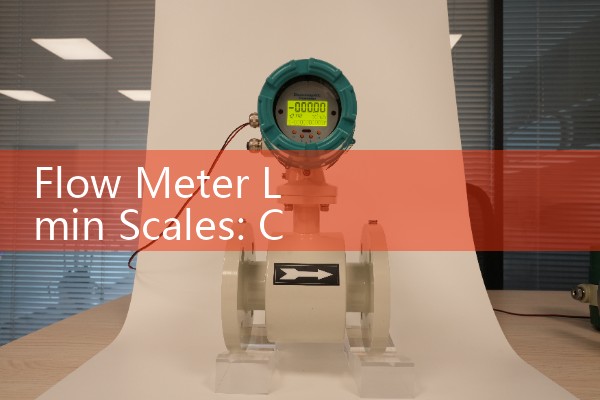
Calculate the error at each point. If the error is below ±1 percent of reading, the unit is acceptable for most lab loops. If the process needs a tighter range, ask for ±0.5 percent or better. A master meter with a valid certificate saves time. We use master calibrators in our Nanjing flow lab for orders from Southeast Asia and the Middle East.
Common Mistakes That Cause Bad L/min Data
One common mistake is selecting a flow meter by pipe size alone. A DN8 hose barb may not match the internal diameter of a 6 mm tube. Always specify the actual tube inner diameter and target flow range. A flow meter with 0.2 to 2 L/min full scale will saturate at 5 L/min. Max flow matters more than average flow.
Another mistake is calibrating with water and then running a different fluid. An oval gear meter calibrated for water will shift if the test fluid is 50 cP ethylene glycol. We ask for fluid type, viscosity in cP, and density in kg/m3. Fluid data lets us select the right meter and perform a factory calibration.
What to Send for a Quote
Send us your flow range in L/min or mL/min, fluid type, viscosity in cP, temperature in °C, pressure in bar, tube size in DN such as DN4, DN8, or DN15, and output signal. Common outputs are pulse, 4-20 mA HART, and RS485 Modbus. Also tell us the wetted material you need. 316L stainless steel, PTFE, PFA, and FFKM are standard options for laboratory flow meters.
Our team can quote a SIL-OG-04 for solvents, a SIL-MAG-06 for water and wastewater, a SIL-COR-01 for mass flow, or a SIL-TMF-01 for gas. Contact Silver Automation Instruments by telephone at +86-135-1213-1526, WhatsApp at 86-135-12131526, or WeChat at +86 13512131526. Visit flow-meter.com.au for product specifications.
Frequently Asked Questions
What does an L/min scale mean on a flow meter?
An L/min scale means the display or output shows volumetric flow rate in liters per minute. A reading of 1.5 L/min means 1.5 liters of fluid pass through the meter in one minute.
How do you calibrate a volumetric flow meter in a laboratory?
Set a stable flow, collect the fluid in a known volume or on a mass balance, and time the collection. Compare the calculated L/min value to the meter reading. Repeat at 10 percent, 50 percent, and 100 percent of full scale.
Which flow meter is best for 0.1 to 5 L/min water testing?
An electromagnetic flow meter like the SIL-MAG-06 works well for clean water, wastewater, and saline water. For lower flows or non-conductive liquids, choose an oval gear or Coriolis meter.
Can Silver Instruments calibrate flow meters before shipment?
Yes. We offer factory calibration with traceable master meters for water and selected fluids. Send us your fluid properties and required calibration points. We will issue a calibration sheet with each unit.
What data is needed for a laboratory flow meter quote?
We need flow range, fluid name, viscosity, density, temperature, pressure, tube size, and output signal. Applications such as dosing, sampling, or fuel cell testing also help us recommend the right model.
Send your flow range and fluid data to Silver Automation Instruments. We will respond with a model, price, and lead time for your laboratory flow meter calibration.
 Hot News
 Related AD