

『Vortex Flow Meter』Related information(flow rotameter|digital flow meter|balo meter|hydraulic flow meter|volumetric meter|positive displacement meter|pitot tube flow meter|displacement meter|cfm meter|variable area flow meter|inline flow meter|differential pressure flow meter|calibrated flow meter|velocity meter|paddle wheel flow meter|oval gear flow meter|anemometer hvac|multiphase flow meter|doppler flow meter|thorpe tube flowmeter|heat flow meter)
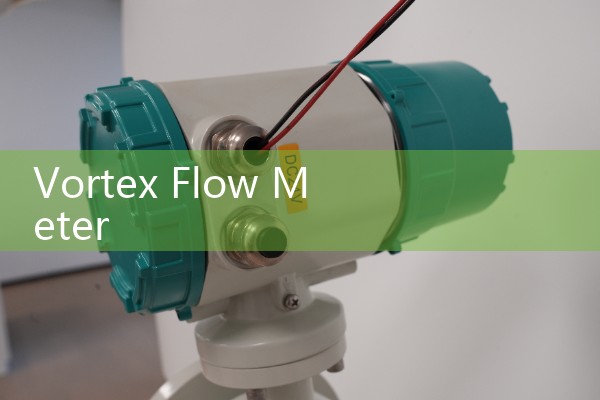
Vortex Flow Meter: Quick Selection, Install Tips and Pricing
Quick Answer: A vortex flow meter generates small vortices from a fixed bluff body. It counts them to give a flow rate with no moving parts. This meter fits clean steam, gas, and low-viscosity liquids. For a price, send your fluid, pipe size (DN), pressure (bar), temperature (°C), and flow range to our team.
How the Measuring Principle Works in Simple Terms
You place a non-streamlined body inside the pipe. The fluid hits this bluff body and sheds alternating vortices downstream. A piezoelectric sensor or a differential capacitance sensor picks up the shedding frequency. That frequency is linear to flow velocity. Multiply by the pipe cross section and you get volumetric flow. In practice, a DN50 vortex meter on a steam line gives a clean frequency signal from 10 Hz up to 600 Hz at full flow. No need to overthink it.
Why Process Engineers in Asia and the Middle East Keep Choosing Vortex Meters
They have zero moving parts. This means no bearing wear, no lubrication, and very low drift over 5 to 8 years. A factory in Vietnam replaced three turbine meters on a saturated steam header with one DN100 vortex meter. Their maintenance log went to zero entries for two years. For gas measurement, a gas distribution skid in Kenya uses a DN80 vortex meter with built-in PT100 and pressure compensation. They read mass flow directly in kg/h via HART. In food plants, CIP cleaning fluids hit 120°C and the meter keeps logging without extra cooling. These are real site outcomes, not lab data.
Where Vortex Meters Work Best and Where They Struggle
Most engineers skip this part, but here is the thing. Vortex meters love clean media with a Reynolds number above 20,000. Steam, compressed air, natural gas, demineralized water, heat transfer oils, and solvents all sit inside this happy zone. They fall short on slurry, high-viscosity fluids above 10 cP, or pulsating flow from piston pumps. A water treatment plant in the Philippines tried a vortex meter downstream of a dosing pump. The signal became unstable. We advised a magnetic flow meter instead. Knowing the limit saves you time.
Key Specs You Must Confirm Before Sending a Request
Write down these numbers. Pipe size from DN15 to DN300. Operating temperature from -40°C up to 350°C for standard models. Pressure rating up to PN40 or Class 300, with higher ratings on request. Fluid type and state: saturated steam, superheated steam, gas, or liquid. Minimum and maximum flow in kg/h or m3/h. Process connection: wafer, flanged, or insertion. Output needed: pulse, 4-20 mA with HART, or Modbus. For steam, specify if you need a flow computer or integrated temperature and pressure compensation. Without these basics, any quotation will be a rough guess.
Silver Automation Instruments SVF Series Vortex Flow Meter
We stock the SVF-300 series for standard applications. It includes a 316L stainless steel body, sensor housing rated IP67, and a local LCD display. Output options are 4-20 mA HART, pulse, and RS485 Modbus. Accuracy is ±1.0% of reading for liquids and ±1.5% for gas
Installation Rules Most Field Techs Follow Blindly
Stick to straight pipe run. Upstream you need minimum 15D of straight pipe after a single bend, and 30D after a control valve or two elbows in different planes. Downstream keep 5D. For steam lines, mount the meter horizontally and ensure the pipe is always full. Avoid mounting right after a pressure reducing valve. Turbulence there gives a noisy frequency signal. Always align the gasket inside the flange. A small protrusion into the flow stream shifts the K-factor. We have seen this on customer sites many times. For steam applications up to 200°C, a clamp-on thermowell for the PT100 keeps response fast without shutting down the line.
Frequently Asked Questions
1. Can a vortex flow meter handle low flow rates?
Yes, but with a limit. The meter needs a minimum Reynolds number above 20,000 to form stable vortices. In low flow, the signal drops out. Always size the meter based on minimum operating flow, not pipe diameter. For very low flows, consider a thermal mass meter instead.
2. Do I need pressure and temperature compensation for steam?
Yes, if you need mass flow in kg/h or energy in MJ/h. Saturated steam density changes with pressure. A PT100 and external pressure transmitter feed into our SVF-300 multi-variable board. It outputs compensated mass flow directly. For superheated steam, both temperature and pressure are mandatory.
3. What output signals does your vortex meter offer?
Standard outputs are frequency/pulse, 4-20 mA with HART, and RS485 Modbus. A pulse output gives you a high resolution totalizer signal for remote counters. HART lets you read flow, temperature, and diagnostic bits over two wires.
4. What straight pipe run is really needed?
At least 15D upstream and 5D downstream for routine installations. After a control valve, plan 30D to 40D upstream. If the pipe run is short, use a flow straightener, but this adds permanent pressure loss. Sometimes a compact electromagnetic meter becomes the simpler choice.
5. How do I get a price and lead time?
Send us your fluid (steam, gas, liquid), pressure in bar, temperature in °C, pipe diameter (DN), minimum and maximum flow, plus process connection type. Our engineers at Silver Automation Instruments will reply with a model code, datasheet, and quotation within one business day. Visit flow-meter.com.au and use the RFQ page or email directly.
Your exact conditions define the meter. Get it right the first time and you cut on-site trial and error drastically.
 Hot Product
 Related AD