

『Oil Flow Meter for Terminal: Managing Massive Bulk Hydrocarbon Distribution Inventory』Related information(flow rotameter|digital flow meter|balo meter|hydraulic flow meter|volumetric meter|positive displacement meter|pitot tube flow meter|displacement meter|cfm meter|variable area flow meter|inline flow meter|differential pressure flow meter|calibrated flow meter|velocity meter|paddle wheel flow meter|oval gear flow meter|anemometer hvac|multiphase flow meter|doppler flow meter|thorpe tube flowmeter|heat flow meter)
Oil Flow Meter for Terminal: Managing Massive Bulk Hydrocarbon Distribution Inventory
Quick Answer
To manage massive hydrocarbon inventory at a terminal, you need a flow meter that gives direct mass flow, live density, and net oil calculation. Silver Automation Instruments supplies Coriolis mass flow meters from DN15 up to DN300 that handle flow rates above 1,500,000 kg/h and deliver custody-transfer accuracy of 0.1% to 0.15%. The meters operate at pressures up to 100 bar, cover fluid temperatures from -50 °C to 200 °C, and come with ATEX Zone 1 or IECEx approvals. This removes the drift, mechanical wear, and inventory reconciliation headaches that come with turbine or PD meters on large lines.
Why Terminal Inventory Accuracy Demands a Different Class of Flow Meter
A 0.15% measurement error on a 500,000-barrel storage facility does not stay small. When you move diesel, jet fuel, or crude through a 24-inch loading arm at 2,000 m³/h, that error translates into product losses worth tens of thousands of dollars every quarter. Terminals in the Middle East, Southeast Asia, and Africa are replacing volumetric counters with direct mass flow meters because mass is immune to temperature swings, density changes, and entrained air. Silver Instruments meters measure mass directly with the Coriolis principle. They eliminate the need for separate density meters, flow computers, and complex volume correction coefficients. One device reports mass total, volume total, density, and temperature on a single 4-20 mA HART loop.
What Field Engineers See on Bulk Oil Lines
Most engineers skip the theory and look at the mechanical reality. On a fuel terminal in Vietnam, a DN250 turbine meter was drifting by 0.4% every six months because bearing wear changed the K-factor. The terminal team had to run master meter proving every three weeks. After switching to a Silver Coriolis meter, the calibration interval moved to once a year. The meter has no moving parts, no upstream straight-run requirements longer than 5D, and it handles viscosity from 0.5 cP up to 50,000 cP. For crude oil terminals that blend heavy and light grades, the built-in density reading flags interface changes instantly. That is not a software estimate; it is a direct physical measurement.
Real Site Data: Diesel Hub in Indonesia
A diesel distribution terminal near Surabaya, Indonesia, loads road tankers and coastal tankers through six bays simultaneously. The old metering skid used positive displacement meters with mechanical registers. Product temperature varied from 28 °C in the morning to 40 °C at midday, and the volume-based compensation often lagged by 10 minutes. Silver Instruments supplied six Coriolis mass flow meters model SCM-150, DN150, with remote transmitters. Each meter measures up to 600 m³/h of diesel with a factory accuracy of ±0.10%. The terminal team reported that monthly inventory reconciliation improved from a 280-barrel unexplained loss to fewer than 15 barrels. The plant manager told us they recovered the investment in 14 months through reduced product giveaway and faster truck turnaround.
They now trend net oil and density data directly into the
Coriolis or Oval Gear for Lighter Loads
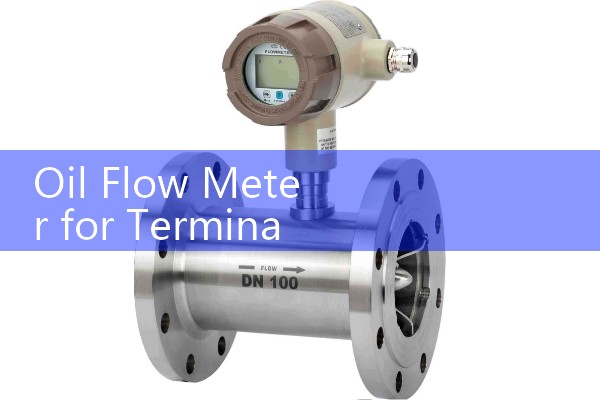
For terminal operations that measure small additive flows, low-flow diesel dispatching, or heavy fuel oil at flow rates below 50 m³/h, an oval gear flow meter can be the more practical choice. Silver Instruments oval gear meters handle viscosities from 1 cP to 2,000 cP and work well on loading arms where space is tight. The rule of thumb is simple: main truck loading bays and pipeline headers above DN80 should use a Coriolis meter. Line sizes below DN50, where budget is an important factor and custody transfer is not mandatory, often run well on oval gear. This hybrid approach reduces capital cost while keeping total inventory uncertainty under 0.2%.
Frequently Asked Questions
1. Which flow meter type delivers the best inventory reconciliation for a multi-product terminal? A Coriolis mass flow meter provides direct mass total and density for each product batch. It removes volume conversion errors and works across diesel, gasoline, and jet fuel without recalibration.
2. What pipe sizes and flow rates can Silver Instruments oil flow meters handle? Coriolis meters range from DN15 to DN300. The largest models manage flow rates up to 2,200,000 kg/h. For heavy crude with high viscosity, we recommend sizing the meter to operate below 50% of its nominal capacity to keep pressure drop low.
3. Do the meters carry hazardous-area certifications required at oil terminals? Yes. Our Coriolis flow meters are certified for ATEX Zone 1 and Zone 2, IECEx, and can be supplied with flameproof or intrinsically safe transmitters. We also provide SIL 2 compliance for safety instrumented systems.
4. How does a Coriolis meter detect product interface during multi-product pipeline transfers? The meter outputs live density every 50 ms. When density shifts from 840 kg/m³ (diesel) to 780 kg/m³ (gasoline), the SCADA can cut the valve immediately. This reduces slop tank volume and speeds up batch changeover.
5. What details do you need to provide a price and lead time for a terminal oil flow meter? Send us your maximum flow rate (kg/h or m³/h), pipe size (DN), fluid name, operating pressure (bar), temperature (°C), and required certifications. We will return a data sheet, dimensional drawing, and quote within one working day. Include whether you need a local indicator, remote transmitter, or Modbus output.
Get a Firm Proposal for Your Terminal Metering Skid
Describe your terminal loading process and send us the fluid parameters. We will recommend the optimum meter size, wetted material, and signal output. No generic brochures, no mass emails. Just a technical answer from an engineer who has worked on jetty loading systems and tank farm metering stations. Contact Silver Automation Instruments through our official website and include DN, pressure, temperature, and fluid type in your message.
 Hot Product
 Related AD