

『High Flow Water Meter Sizing: Large-Diameter Flanged Electromagnetic Sensors for Water Mains』Related information(flow rotameter|digital flow meter|balo meter|hydraulic flow meter|volumetric meter|positive displacement meter|pitot tube flow meter|displacement meter|cfm meter|variable area flow meter|inline flow meter|differential pressure flow meter|calibrated flow meter|velocity meter|paddle wheel flow meter|oval gear flow meter|anemometer hvac|multiphase flow meter|doppler flow meter|thorpe tube flowmeter|heat flow meter)
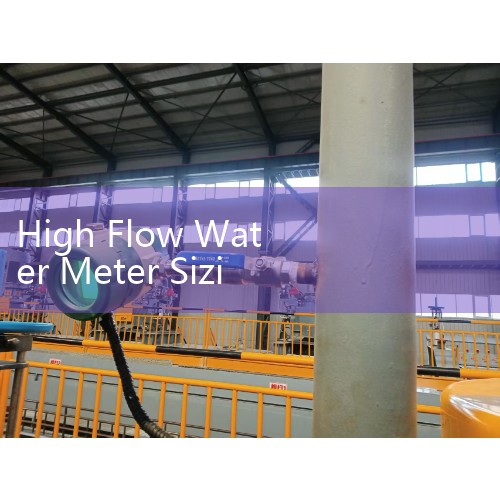
High Flow Water Meter Sizing: Large-Diameter Flanged Electromagnetic Sensors for Water Mains
Quick Answer: For water mains above DN300, a flanged electromagnetic flow meter gives stable accuracy around 0.5 percent with no moving parts and almost zero pressure drop. Size the meter by pipe diameter plus normal and peak velocity, not by pipe size alone. Send your pipe size in DN, pressure in bar, water temperature in °C, and flow range in m3/h to Silver Instruments for a factory quote.
Why flanged electromagnetic meters suit water mains
Silver Automation Instruments supplies flanged electromagnetic sensors from DN15 up to DN2000 for raw water, potable water, cooling water, and desalination brine lines. The sensor body has no moving parts. Nothing wears out from sand, silt, or biofilm. That matters on large water mains because a shutdown costs more than the meter itself.
An electromagnetic meter measures flow when water passes through a magnetic field. The electrode signal is linear. Accuracy stays stable at 0.5 percent of reading or better. In practice, we have seen this hold for municipal water networks that run 24 hours a day. The only process condition you need is a minimum conductivity, normally above 5 µS/cm. Most tap water and river water easily meets this.
Sizing method: velocity, flow range, and pipe size
Here is the thing. Many water main flow meter sizing mistakes come from using nominal pipe diameter without checking velocity. A DN600 line can run at 0.1 meters per second during night demand and 3 meters per second during a fire flow test. One meter can cover that range, but the low flow uncertainty increases below 0.3 meters per second. You need normal, minimum, and peak flow rates.
For water mains, size the sensor so normal flow lands between 1 and 3 meters per second. Peak flow can go up to 10 meters per second for short periods. Minimum flow should stay above 0.3 meters per second if possible. Below that, accuracy drops off. A flanged full bore electromagnetic meter does not create a pressure drop, so there is no reason to downsize the sensor below the pipe diameter just to save energy.
Example. A DN800 potable water trunk main with a normal flow of 2200 m3/h runs around 1.2 meters per second. That is a good fit. If the same line has a night flow of 120 m3/h, the velocity is only 0.07 meters per second. In that case, you either accept reduced accuracy at night or install a smaller bypass meter for low flow leak detection.
Parameters to specify for water mains
Send us these values and we can propose a meter in one working day. Pipe size in DN or inches. Fluid type such as potable water, raw water, or wastewater effluent. Flow range in m3/h or MLD. Operating pressure in bar. Water temperature in °C. Required liner and electrode material. Flange standard and pressure class. Power supply and output signal.
For potable water mains, common liner choices are hard rubber or EPDM. Electrodes are usually 316L stainless steel. For seawater or brackish water, specify titanium electrodes and a PTFE or polyurethane liner. For drinking water, all wetted materials must meet local approval like NSF or WRAS depending on the country.
Grounding is important. Large diameter electromagnetic flow meters need reliable grounding rings or grounding electrodes. In a non-conductive lined pipe, a grounding ring prevents stray voltage from corrupting the flow signal. We have seen this on customer sites in Vietnam where a missing grounding ring caused unstable readings on a DN500 raw water line.
Flange standards and pressure ratings
Water mains use different flanges by region. In Southeast Asia and the Middle East, PN10 and PN16 flanges are common. In Latin America, many projects follow ANSI 150 or ANSI 300. In Australia, AS4087 or AS2129 flanges appear on water utility work. Silver Instruments can match DIN, ANSI, JIS, or AS flange drilling on large sensors. Confirm the exact standard before ordering because DN600 PN10 and DN600 ANSI 150 ar
_600x400.jpg)
Pressure rating is straightforward. Choose PN10 or PN16 for most municipal water lines. Use PN25 or ANSI 300 for high pressure transmission mains. The sensor body and flange rating must match the worst surge pressure, not just normal operating pressure.
Outputs and remote monitoring
A flanged electromagnetic flow meter from Silver Instruments can output 4 to 20 mA with HART, pulse, and RS485 Modbus. For water mains in remote pump stations, use Modbus over a SCADA link. The meter can also log bidirectional flow. This matters when a network feeds a reservoir at night and draws from it in the morning.
Battery powered systems are possible on some large meter packages, but most DN400 and bigger installations use AC or DC power with a remote converter. The converter can be wall mounted up to 50 meters from the sensor using a shielded signal cable.
Installation notes from customer sites
Most engineers skip this part until after a bad flow reading. Keep the sensor full of water at all times. Install it in a low point or an upward run, not at the top of a pipe where air collects. Air bubbles on the electrodes produce noisy readings.
Straight pipe requirements matter less for electromagnetic meters than for turbine or vortex meters. But we still recommend 5 pipe diameters upstream and 3 downstream from the sensor. If there is a control valve, pump, or elbow immediately upstream, extend the straight run or use a flow conditioner.
A desalination plant in Chile installed a DN1000 electromagnetic meter on a brine discharge line with only 4 diameters of straight run upstream. The reading was stable because the brine flow was steady. Still, the plant later added a longer spool piece to reduce uncertainty during low velocity periods.
Factory price and quote details
Price depends on diameter, liner, electrodes, flange rating, converter location, and approvals. A DN600 flanged electromagnetic water meter costs less per installed cubic meter of capacity than a turbine meter with a strainer and bypass. For budget planning, send us your pressure in bar, temperature in °C, pipe size in DN, and flow range in m3/h. We will reply with a technical data sheet and a quotation from Silver Automation Instruments.
Contact our engineers by Tel: +86-135-1213-1526. WhatsApp is 86-135-12131526. WeChat is +86 13512131526. You can also visit flow-meter.com.au for product specifications.
FAQ: High flow water meter sizing
What is the minimum conductivity for a large electromagnetic water meter? Most standard sensors need at least 5 µS/cm. Raw water, potable water, and groundwater normally exceed this. For demineralized water below 5 µS/cm, switch to a different technology or specify a high sensitivity converter.
Can one meter cover both low night flow and peak day flow on a water main? It depends on turndown. A typical electromagnetic meter has a 100 to 1 turndown. If your normal and peak velocity fits 0.3 to 10 meters per second, one meter works. If night flow drops below 0.1 meters per second, consider a smaller bypass meter for leak monitoring.
Do large diameter flanged meters create pressure drop? They do not. Full bore electromagnetic sensors have the same internal diameter as the pipe. There are no moving parts, cones, or orifices. This is a key reason water utilities choose them for low pressure gravity mains.
What liner and electrode should I select for potable water? Hard rubber or EPDM liner with 316L stainless steel electrodes is standard. For chlorinated water, check the chlorine concentration. For aggressive water or seawater, move to PTFE lining and titanium electrodes.
What details does Silver Instruments need to quote a DN600 or DN1000 water main meter? Send pipe size in DN, pressure in bar, temperature in °C, flow range in m3/h, flange standard, and output signal. Our engineers will confirm the right sensor and provide a quotation.
 Hot Product
 Related AD